The quieter the house, the louder the screens. I have sat with couples who love each other dearly and cannot recall the last dinner that passed without a notification stealing someone’s gaze. Most are not reckless or uncaring. They are simply saturated. Apps are designed to keep attention hooked. Work slips into the evening. Friends live in the phone. The result is a relationship that runs on background processing, always on, rarely present.
Digital overload is not a moral failing. It is an attentional environment. Couples therapy helps partners see that environment clearly, then renegotiate it together. The goal is not a Luddite purge. It is contact. When two people reclaim moments that feel human, warmth returns, conflict softens, and the home stops feeling like a co-working space with sofas.
How digital overload shows up between partners
The signs are mundane, which is why they get missed. A pair on a couch scrolling separate feeds after nine, both “tired,” neither restored. Short fuses after a day of back-to-back video calls. Sex becoming logistical rather than playful because everyone’s brain is stuck in task mode. One partner says, “I told you this already.” The other hears it for the first time. These are small cuts. Over months and years, they change the culture of a relationship.
Attention is a resource couples spend without tracking. I often ask, across a normal evening, how many times do pings interrupt you both? A rough count lands between six and twelve for many households. During a conflict, even two interruptions can restart the emotional elevator at the ground floor. That backslide is why arguments seem to drag. Every ding is a reset.
There is also the private toll that creeps into the shared space. People report checking their phones anywhere from 80 to 150 times a day, with total screen time hovering between three and six hours. These numbers do not doom a partnership, but they create background noise that drowns out nuance. When your brain is toggling constantly, small bids for connection do not register. A joke falls flat. A sigh goes unnoticed. A partner’s offer to help sounds like interference.
Couples therapy’s first task: map the digital terrain
Before setting rules, a therapist helps the pair notice what is real. Many arguments tagged “screen time” are about fairness, safety, hierarchy, or loneliness. A shared map keeps the couple from policing each other’s phones like hall monitors, and instead aligns them against the actual problem.
A practical first step is to track the week without changing anything. Couples bring in time use screenshots, notification summaries, and short notes about moments that felt good or bad. We look for patterns more than totals. Does doomscrolling spike after difficult meetings? Do notifications cluster at bedtime? When one partner is anxious, does the other ramp up messaging for reassurance? This kind of evidence removes shame and gives the conversation texture.
If you work on call or across time zones, the solution is not going to be a universal 8 pm cut off. Context matters. I have worked with ICU nurses who need their phones at night, software engineers carrying pagers twice a month, and artists whose best clients live in another hemisphere. The map must match the terrain you actually live on, not an idealized lifestyle blog.
A short checklist to start the conversation
Use this to anchor a first or second session, or try it at home to move the conversation from blame to design.
- What specific moments do each of you miss and want back, even for 15 minutes? Which apps or features genuinely serve the relationship, and which mostly drain it? Where do you each need protected focus for work or rest, and when? What emergencies or exceptions are real, and how often do they occur in a typical month? What are two tiny changes you can make this week that would be felt, not just tallied?
Notice the order. We start with missing moments, not quotas. People stick with changes that create desired experiences, not just reductions.
Boundaries that feel human, not punitive
Rules work when they make life better quickly. A five minute phone basket at dinner is not about purity. It buys eye contact and a sense of shared meal. Ten minutes of undistracted debrief after work creates a soft landing. Couples who hold a 20 minute window for affection before bed often sleep better and fight less the next day. These shifts are small on a calendar, large in effect.
Some homes benefit from environmental tweaks. Charging stations that live outside the bedroom. A cheap analog alarm clock replacing the phone wake up. Do not underestimate how much easier it is to keep a boundary when you are not white knuckling an object that buzzes every nine minutes.
Consider also the body. If you move your phone far away during a break, but your shoulders are still locked and your breath shallow, your mind does not know you left. Brief resets help. Walk to the sink and splash water. Stretch for ninety seconds. These acts sound trivial. The nervous system cares. When both partners do these micro-resets, their tolerance for each other rises.
Repairing attention as a shared practice
Think of attention like muscle. Couples can strengthen it together, which is more efficient than each individual trying to fix themselves in isolation. A short shared practice goes a long way. Sit across from each other, hold a neutral object like a cup, and take turns describing it for two minutes while the other listens without solving or adding. Switch. It feels odd at first, then something clicks. The exercise trains a kind of mutual presence that carries into real conversations.
Another approach is time boxing. Choose a 25 minute window for a joint task, no phones visible. Tidy the living room, prep lunches, review calendars. Use a simple kitchen timer. When it rings, stop even if the task is not done. Predictable starts and stops build trust in the boundary, and the visible productivity makes the boundary feel useful rather than restrictive.
Partners who struggle with eye contact, or who find “undivided attention” taxing, can sit side by side and work a puzzle, fold laundry, or walk. Parallel activity reduces social load while preserving presence. For neurodivergent couples, this adjustment is often the difference between thriving and burning out. Neurodivergent therapy frequently emphasizes sensory regulation and pacing. Importing those principles into couples therapy makes the work fair.
Where trauma therapy fits when tech becomes a shield
Sometimes the phone is not simply a habit. It is armor. People with trauma histories may use screens to numb or to manage hypervigilance. Scrolling can be a predictable, controllable stream when the inner world does not feel safe. If that is in play, shaming the device use backfires, and partners start feeling like adversaries.
Trauma therapy helps disentangle safety from avoidance. Within couples therapy, we might do brief stabilization work. Grounding strategies, breath pacing, and safe place imagery prepare a partner to tolerate unplugged time. If trauma symptoms are prominent − flashbacks, startle responses, dissociation − I often coordinate with an individual therapist. EMDR therapy can be especially helpful for reducing the intensity of triggers that spill into the relationship. When a past experience no longer hijacks the nervous system so readily, present day digital boundaries stop feeling like deprivation.
There is a myth that you must fix trauma first, then work on the relationship. In practice, these tracks run in parallel. Gentle, predictable connection at home supports trauma recovery. And trauma processing makes it easier to lean into that connection. The couple becomes part of the treatment team.
When one partner is always on call
Some roles do not allow for full digital detox. Physicians, first responders, network engineers, single parents sharing custody schedules, all carry obligations that do not fit tidy rules. Fairness here is about transparency and compensation, not false equality.
I coach couples to define a visible “on call state.” Maybe a red coaster under the phone signals that interruptions are possible. The other partner sees the coaster and prepares accordingly. Compensation then happens on the back end. If a night gets peppered with pages, the interrupted partner gets a protected hour the next day while the on call partner runs point at home. This balance is measurable and prevents slow resentment.
Repairing conflict hijacked by screens
Nothing derails repair like a mid-argument notification. Most couples do not intend to read the message, but the glance is enough to signal disinterest. The wounded partner escalates. The glancer defends, “It was just my sister.” Now we are off the topic and onto character.
A practical fix is a conflict ritual. When tension rises, both partners name a micro pause. Phones go face down out of arm’s reach. Set a 12 minute timer. One speaks for two minutes. The other reflects back one sentence, no commentary. Switch. Repeat. When the timer ends, take a 90 second body reset, then decide whether to continue or schedule a second round within 24 hours. The structure makes space for emotion while protecting the boundary from drift.
If a couple finds that intense feelings trigger urgent checking, we look for the function. Are they seeking a lifeline, distraction, or proof that someone else is on their side. Understanding that function allows more honest agreements. For example, “If I reach for my phone in a fight, it means I am flooded. I will say that out loud, put the phone away, and ask for a five minute break.”
Parents, kids, and the family attention economy
When children are in the home, the couple’s digital habits become the family’s baseline. That should not mean perfection. It does mean modeling repair. If a child interrupts and you choose to finish a text, narrate it. “I want to hear you, and I need 20 seconds to finish this message so I can give you full attention.” Then keep the promise. Predictability beats constant availability.

Child therapy is often part of the picture when screen conflicts erupt. Kids use devices for regulation and for connection, just like adults. If a child is melting down at shutdown time, the issue may be transitions, not total minutes. A child therapist can help the family build smoother routines and can screen for learning or sensory needs that make digital life both appealing and hard to step away from. When adults align and make transitions kinder, evening tension recedes, and the couple has more bandwidth for each other.
Blended or co parenting situations add layers. The household does not control both homes’ rules. In those cases, aim for clarity over uniformity. Kids adjust to different norms if the messaging is consistent. “At mom’s the rule is X. Here the rule is Y and here is why.” Partners who present that https://privatebin.net/?b4dd5b0eec542568#7ZJ3iFKKi1U5vH5UvfTHdQqgCFg1fciJkkSEN67FDChF stance as a team, rather than arguing about it in front of kids, earn trust with each other and with the children.
A four step weekly reset that couples actually keep
Try this for three weeks. It takes less than an hour total each week and tends to stick because it feels good quickly.
- Choose a 30 minute “orientation meeting” on Sunday. Sit with calendars visible, list the non negotiables for the week, and mark two shared offline windows of at least 20 minutes each. Create one “offline anchor” tied to something you already do daily, like coffee or a dog walk. Phones stay in a drawer for that 10 to 15 minutes, seven days in a row. Pick one micro comfort for each partner that supports presence, such as a lamp dimmer, a blanket, or specific music at low volume. Set it up before your offline windows begin. On Friday, debrief for ten minutes. Name one moment you valued, one friction point, and one tweak for next week. Keep notes to track what works over time.
This reset is not a challenge or a purity contest. It is maintenance. The more it feels like setting the table for a meal you enjoy, the more you will return to it.
When one partner wants change and the other shrugs
Mismatch in motivation is common. One person sees the cost of screens clearly. The other says, “I am fine.” Pressure in this dynamic breeds evasion. The more one pushes for detox, the more the other hides their use or digs in.
The therapist’s job is to widen the lens. Instead of arguing about total minutes, we hunt for shared values. What experiences does each partner want more of. Laughter, competence, rest, intimacy, adventure. Then we design a single experiment that serves that value. If the value is rest, agree to a 9 pm lights low window twice a week, with phones charging elsewhere, and measure sleep quality subjectively. If the improvement is felt, momentum builds. If not, you try a different experiment. No villain, just learners.
Keep an eye out for covert contracts. “If I give up my nightly scroll, you will initiate sex more.” Those bargains sour quickly. State desires directly and separate them from the tech boundary. It is fair to want both fewer distractions and more touch. It is unfair to make one conditional on the other without agreement.
Supporting neurodivergent needs without pathologizing
Neurodivergent partners often use devices to regulate sensory input and social demand. Noise canceling headphones, predictable online communities, structured games, and text based communication can be stabilizing. Removing those supports wholesale is not thoughtful.
Neurodivergent therapy, especially when it respects lived experience rather than policing traits, offers practical tools that pair well with couples work. Clear transitions with visual timers. Agreements about eye contact alternatives. Explicit check ins rather than assuming hints will land. Shared calendars that include recovery time, not just obligations. When these supports are in place, screen time stops being the only oasis from overwhelm, and offline connection becomes feasible rather than costly.
If a partner has ADHD, remember that time blindness and novelty seeking are features, not bugs. Phone design exploits those. Instead of relying on willpower, shape the environment. Put frequently used tempting apps on a second or third screen, or require a short friction step like a passcode for opening them during certain hours. Use external cues. A kitchen timer that rings for the end of a break can be more reliable than an internal sense of passing minutes.
Measuring progress that matters
Couples like numbers. They want to know if the effort is working. Counting minutes can help in the early awareness phase, but impact shows up elsewhere. Track arguments that derail and whether they repair faster. Track the number of evenings that end with you feeling like teammates rather than parallel project managers. Track sleep satisfaction on a zero to ten scale. Track small joys, like laughing together or sharing something you found interesting.
Expect ebb and flow. Product launches, illnesses, visits from family, or a new child will spike screen time. That is normal. What matters is how quickly the pair returns to baseline rituals. Think of it like fitness. A week off does not erase strength if your form is solid when you come back.
When to bring in more support
If repeated attempts to set boundaries lead to explosive conflict, secrecy, or withdrawal, or if one partner’s digital use hides gambling, pornography that violates agreements, or financial risks, widen the circle of care. Couples therapy can address the relational dynamics, while individual work targets impulse control, shame, or trauma drivers. If the nervous system is perpetually on edge, trauma therapy offers stabilization. EMDR therapy may reduce the intensity of triggers that make escape into screens feel like the only relief. For families where kids are caught in the crossfire, short term child therapy can lower household reactivity and return the couple to a position of leadership.
Consider also medical contributors. Sleep apnea, chronic pain, perimenopause, and certain medications affect attention and irritability. When the body is taxed, screens become easy relief, and patience thins. Coordinating with a primary care provider can remove hidden friction.
Stories that tend to stick
A couple in their mid thirties, both litigators, swore they could not change. Court deadlines, partners texting at all hours, clients in crisis. We built a tiny window, nine minutes after dinner, phones on the mantle. They rolled their eyes. Then their dog sat between them on the rug every night, like a metronome. By week three, they defended that nine minute window as if it were oxygen. Once the value was felt, they added a second window without my prompting.
Another pair, long married, fought about nothing in particular most evenings. We discovered a rhythm. He scrolled news after dinner and grew quietly agitated. She noticed the agitation and asked questions to soothe, which he experienced as control. We replaced his scroll with a 15 minute chess puzzle on paper, which scratched the itch for problem solving without the outrage. Her question energy redirected to a nightly word game. Their talk became lighter. They did not become monks. They became reachable.
Reclaiming intimacy without gadgets in the room
Intimacy likes anticipation and attention. Phones soak both. You do not need to stage cinematic date nights to shift this. Choose one room or corner that is consistently tech light. Add whatever makes that space inviting. Soft light, a chair you both fit in, a plant. Claim 20 minutes there twice a week with no agenda. Sometimes you will talk. Sometimes you will sit with tea. Sometimes you will touch. The predictability does the heavy lifting. Desire often follows safety, not the other way around.
For sexual connection, treat screens like cilantro in a stew. A little can brighten, too much overpowers. Some couples enjoy a shared playlist or reading something erotic together on a tablet, then put it away before contact. Others find any device presence shatters the spell. Pay attention to what builds energy rather than assuming you should or should not include technology. If past sexual trauma is present for either partner, coordinate with trauma therapy to pace experiments gently. Autonomy and choice are non negotiable.
What success tends to feel like
When couples dial down digital intrusion thoughtfully, the house sounds different. Not silent, more like less brittle. People interrupt each other less and forgive faster. Work remains busy, but evenings stop feeling like triage. Partners report a strange surprise: boredom. That is not a failure. Boredom is fertile. It is the doorway to play, and play is the solvent that loosens long stuck patterns.
You do not have to become a different kind of person to reclaim this territory. You do not need more willpower than you currently possess. You need design that respects your reality, rituals that reward you quickly, and compassion for the parts of you that seek comfort in bright little rectangles. Couples therapy offers a place to build those pieces with intention, to notice the old injuries that make presence feel risky, and to practice being with each other in a way that your bodies recognize as home.
The point is not being offline for its own sake. The point is to be online with each other, in the room, for the moments that matter. When you both can look up and meet the other’s eyes without the tug of elsewhere, the relationship gets its center of gravity back. Step by step, window by window, you can make that your normal again.
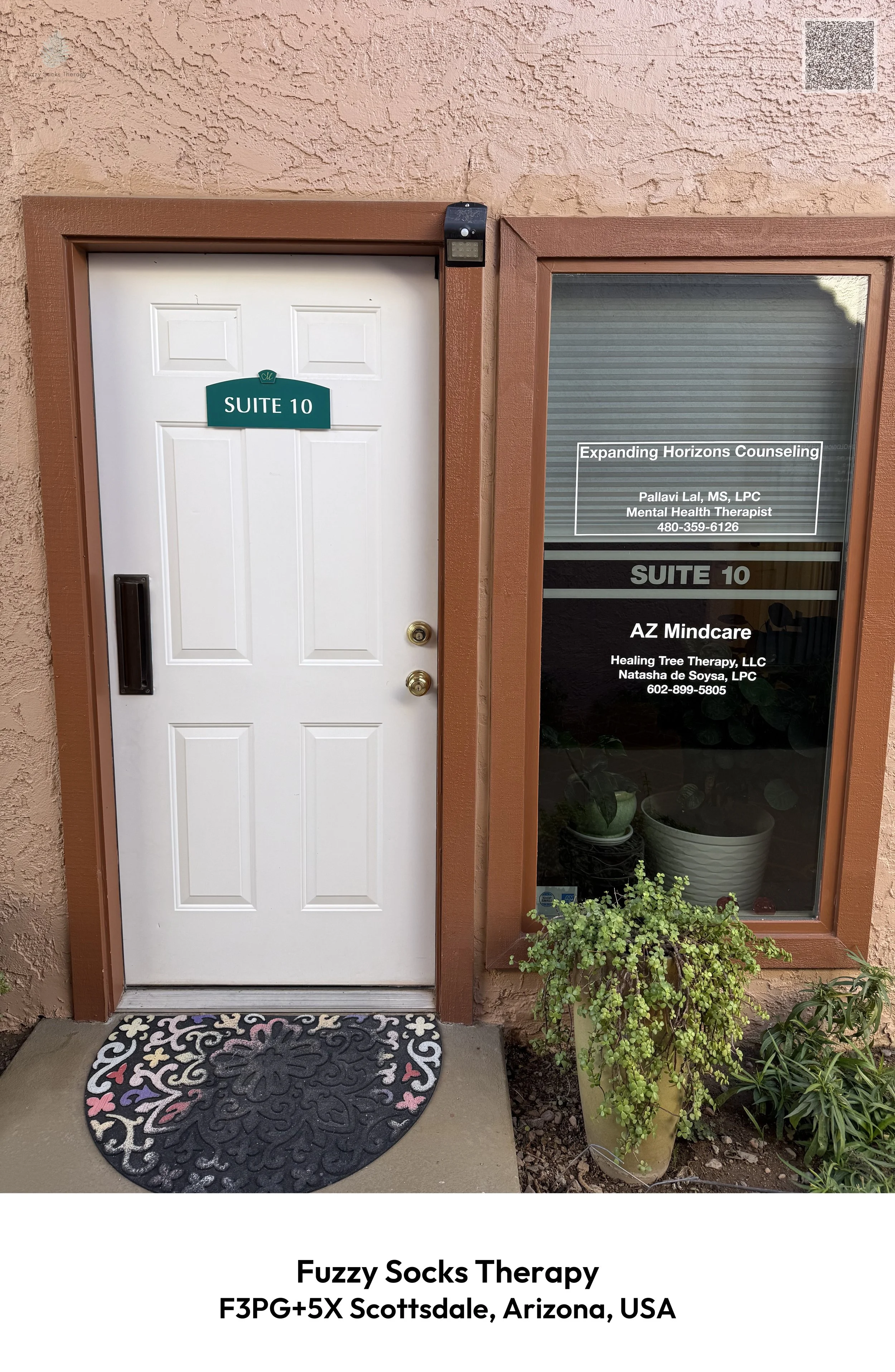
Address: 3295 N. Drinkwater Blvd., Suite 10, Scottsdale, AZ 85251
Phone: (720) 378-8454
Website: https://www.fuzzysockstherapy.com/
Email: [email protected]
Hours:
Monday: 9:00 AM - 5:00 PM
Tuesday: 9:00 AM - 5:00 PM
Wednesday: 9:00 AM - 5:00 PM
Thursday: 9:00 AM - 5:00 PM
Friday: 9:00 AM - 5:00 PM
Saturday: Closed
Sunday: Closed
Open-location code (plus code): F3PG+5X Scottsdale, Arizona, USA
Map/listing URL: https://maps.app.goo.gl/cqhwvXU4UMg6QL1YA
Embed iframe:
The practice offers in-person therapy in Scottsdale along with online sessions for clients in Arizona, Colorado, and Florida.
Clients can explore services such as trauma therapy, EMDR therapy, Deep Brain Reorienting Therapy, neurodivergent therapy, child therapy, couples therapy, discernment counseling, and parenting intensives.
Fuzzy Socks Therapy is especially relevant for people navigating trauma, dysfunctional family dynamics, ADHD, autism, relationship conflict, and emotional overwhelm.
The website presents a direct, practical therapy style focused on real tools and meaningful change rather than vague advice.
Scottsdale clients looking for trauma-informed psychotherapy can find support that combines deeper healing work with concrete skill building.
The practice also offers help for adult children of dysfunctional families, couples on the brink, and neurodivergent kids, teens, and adults.
To get started, call (720) 378-8454 or visit https://www.fuzzysockstherapy.com/ to book a free consultation.
A public Google Maps listing is also available for Scottsdale location reference alongside the official website.
Popular Questions About Fuzzy Socks Therapy
What does Fuzzy Socks Therapy help with?
Fuzzy Socks Therapy helps with trauma, dysfunctional family patterns, neurodivergence, relationship conflict, emotional overwhelm, and related challenges for individuals, couples, and families.
Is Fuzzy Socks Therapy located in Scottsdale, AZ?
Yes. The official website lists the office at 3295 N. Drinkwater Blvd., Suite 10, Scottsdale, AZ 85251.
Does Fuzzy Socks Therapy offer in-person and online sessions?
Yes. The official site says the practice offers in-person therapy in Scottsdale and online therapy in Arizona, Colorado, and Florida.
What therapy approaches are listed on the website?
The website highlights EMDR therapy, Deep Brain Reorienting Therapy, discernment counseling, play therapy, Dialectical Behavior Therapy, Emotionally Focused Therapy, and practical trauma-informed skill building.
Who provides therapy at Fuzzy Socks Therapy?
The official website identifies the therapist as Lianna Purjes.
Does the practice offer couples counseling?
Yes. The website includes couples therapy, couples intensives, and discernment counseling for couples deciding whether to stay together or separate.
Does the practice work with children and adolescents?
Yes. The site says the practice offers child therapy and support for children, adolescents, and their families.
How can I contact Fuzzy Socks Therapy?
Phone: (720) 378-8454
Email: [email protected]
Website: https://www.fuzzysockstherapy.com/
Landmarks Near Scottsdale, AZ
Drinkwater Boulevard is the clearest local reference point for this office and helps nearby clients place the practice in Scottsdale. Visit https://www.fuzzysockstherapy.com/ for service details.
Old Town Scottsdale is a familiar city landmark and a practical reference for people searching for therapy near central Scottsdale. Call (720) 378-8454 to learn more.
Scottsdale Civic Center is another recognizable local landmark that helps define the surrounding area for nearby professional services. The official website has current contact details.
Scottsdale Stadium is a well-known destination in the city and a useful point of reference for local users. Fuzzy Socks Therapy offers both in-person and online sessions.
Indian School Road is a major corridor that helps many residents orient themselves in Scottsdale. More information is available at https://www.fuzzysockstherapy.com/.
Fashion Square and the surrounding central Scottsdale area are widely recognized by local residents and visitors alike. Reach out through the website to book a free consultation.
Downtown Scottsdale is a strong local search reference for people seeking counseling and psychotherapy services in the area. The practice serves Scottsdale in person and multiple states online.
Scottsdale Road is another major route that helps define the broader service area for clients traveling from nearby neighborhoods. The practice supports individuals, couples, and families.
The Scottsdale arts and civic district is a useful area reference for those familiar with the city center. Visit the site to review specialties and next steps.
Central Scottsdale commuter corridors make this practice relevant for nearby residents who want in-person therapy, while online sessions add flexibility for clients in Arizona, Colorado, and Florida.